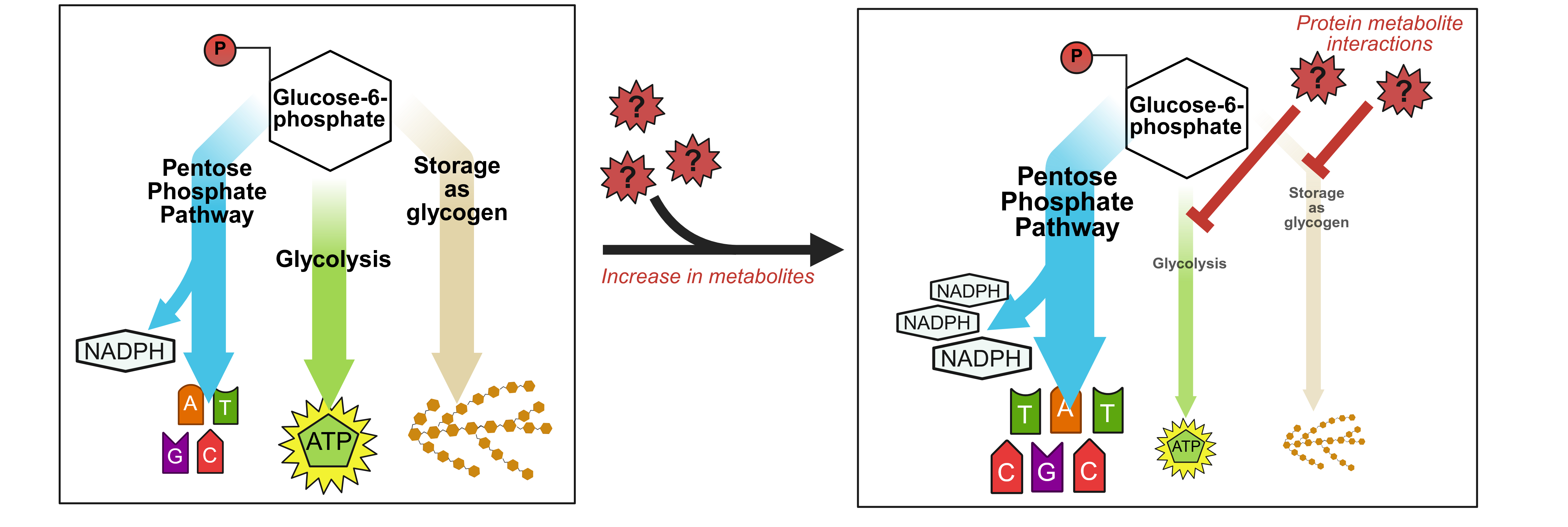
Metabolite Regulators of Glucose Fate
Glucose is the main source of fuel for our cells. However, not all glucose is oxidized through glycolysis to create ATP. Glucose can also be converted to glycogen for storage or diverted into the pentose phosphate pathway (PPP) to regenerate NADPH and precursors of nucleotide biosynthesis. In the Hicks lab, we are interested in uncovering the protein metabolite interactions that regulate the metabolic fate of glucose. For example, an accumulation of metabolic precursors of NADPH dependent pathways may serve as signals that the cell must divert glucose-6-phosphate away from glycolysis and into the PPP to generate more NADPH.
Better understanding of how enzyme activity is regulated by both covalent and non-covalent metabolite interactions will reveal how metabolism becomes dysregulated in conditions like cancer, diabetes, and aging.